
City skylines have always drawn people upward. Rooftop bars and lounges deliver something few other venues can offer: open air, elevated views, and an atmosphere that feels distinctly different from street-level nightlife. Yet operating an outdoor rooftop venue comes with challenges. Weather changes quickly. Sun exposure can affect daytime service. Wind, rain, and temperature shifts all influence guest comfort.
Modern hospitality venues are addressing these challenges through smarter outdoor design. Adjustable louvered roof systems are redefining how rooftop bars function, allowing operators to control their environment with precision while maintaining the open-air experience guests expect.
Across major cities and hospitality markets, smart pergolas are becoming a defining architectural feature for rooftop venues. They provide flexibility, weather protection, and visual appeal that traditional structures cannot match. For restaurant groups, developers, and hospitality designers, they represent a new standard for rooftop entertainment spaces.
Why Rooftop Bars Continue to Grow in Popularity
Rooftop venues offer a powerful combination of atmosphere and exclusivity. Guests often associate rooftop lounges with premium experiences, making them highly attractive destinations for social gatherings, date nights, and private events.
The appeal comes from several elements working together.
First, rooftop locations naturally create a sense of escape. Being above the city introduces views, light, and open air that indoor spaces cannot replicate. The environment feels vibrant and dynamic, particularly during sunset and evening hours when lighting and skyline views enhance the experience.
Second, rooftops create strong branding opportunities for hospitality venues. A well-designed rooftop bar can become the signature feature of a property, attracting guests who might not otherwise visit.
Third, outdoor spaces have gained even greater attention in recent years as diners increasingly value fresh air and flexible seating environments.
However, rooftop operations present real logistical challenges. Operators must balance aesthetics, safety, comfort, and weather protection while maintaining the open feel that defines the rooftop experience.
This is where smart pergola systems deliver a significant advantage.
The Limitations of Traditional Rooftop Coverings
Before the rise of adjustable louvered roof systems, rooftop venues had limited options for shade and protection.
Fixed awnings and static pergolas offered partial coverage but lacked flexibility. These structures could block sunlight during the day but provided little protection from rain or strong wind. If weather conditions changed unexpectedly, venues often had to close sections of their rooftop seating areas.
Temporary umbrellas provided some adaptability, yet they introduce safety concerns in elevated environments. High winds can make them unstable, and they rarely provide consistent coverage across larger seating areas.
Retractable fabric systems addressed some of these issues, but fabric materials can wear down over time and require regular maintenance. They also lack the structural presence many upscale venues want in their design.
These limitations often force operators to make compromises between comfort, durability, and aesthetics.
Smart pergolas eliminate many of these tradeoffs.
What Makes a Pergola “Smart”
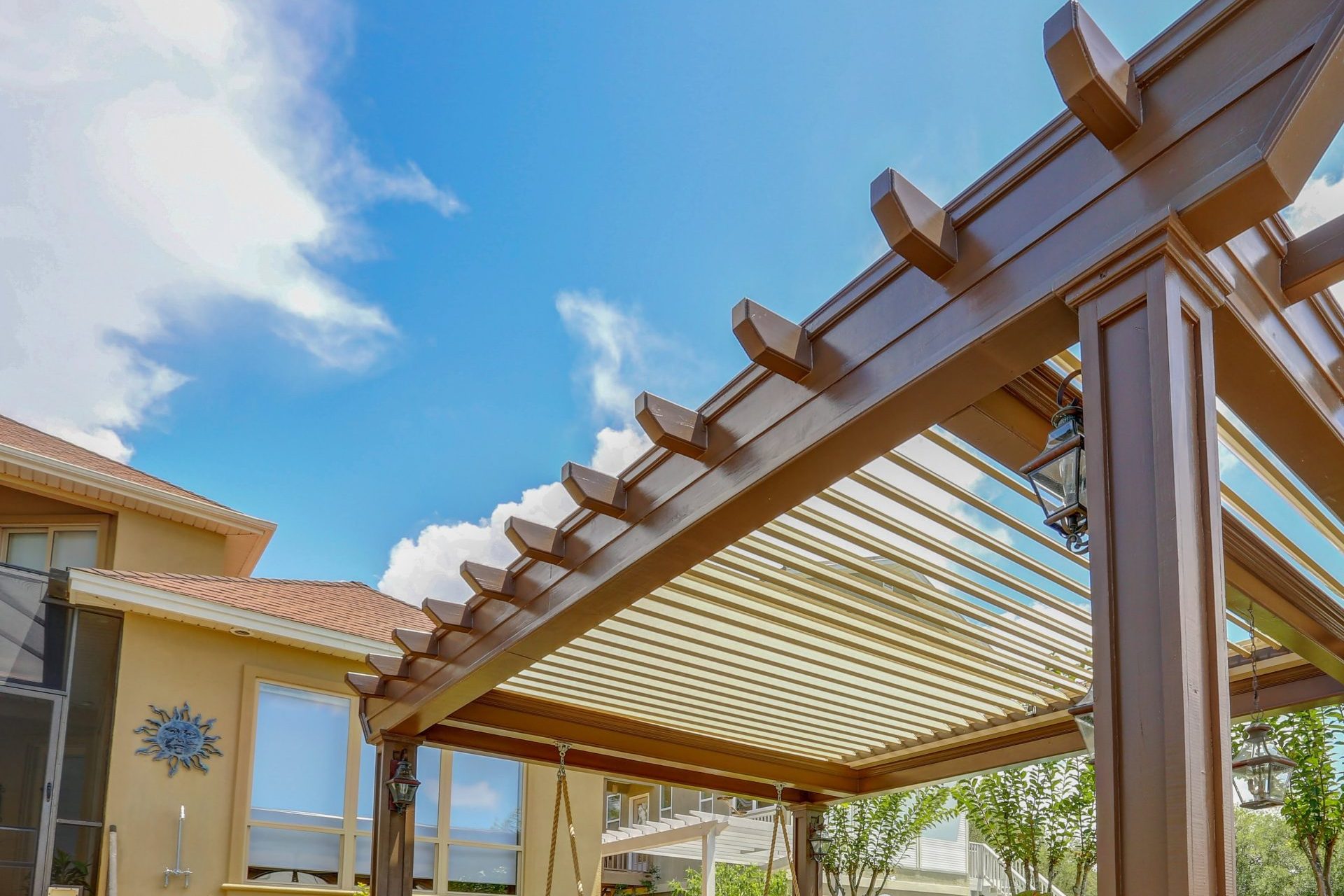
Smart pergolas incorporate motorized louvered roof systems that can be adjusted with precision. The louvers rotate to control sunlight, airflow, and shade, giving operators the ability to adapt to changing conditions throughout the day.
When open, the roof allows sunlight and natural airflow to pass through, creating a bright outdoor atmosphere. When closed, the louvers form a solid surface that protects guests from rain while directing water into an integrated drainage system.
Many systems can be controlled through wall switches, remote controls, or automated sensors that respond to weather changes. Rain sensors can trigger the louvers to close automatically, helping venues maintain service during sudden weather shifts.
Lighting, fans, and heaters can also be integrated directly into the pergola structure, allowing venues to transform their rooftop environment from daytime brunch service to nighttime lounge ambiance.
This level of control gives rooftop venues something they rarely had before: reliable outdoor functionality.
Expanding Rooftop Service Hours
One of the biggest advantages of smart pergolas is the ability to extend operating hours.
Sun exposure can make rooftop seating uncomfortable during peak daylight hours. Adjustable louvers allow operators to create shade while still maintaining airflow, making daytime dining more pleasant for guests.
As evening approaches, integrated lighting systems can illuminate the space without disrupting the open-air atmosphere. The pergola structure provides an ideal framework for ambient lighting that enhances the visual appeal of the rooftop.
Heaters can also be incorporated into the system, allowing rooftop venues to remain comfortable during cooler nights or transitional seasons.
These features allow venues to operate their rooftop spaces more consistently throughout the day and across more months of the year.
For hospitality businesses, that translates directly into increased seating capacity and revenue potential.
Designing Rooftop Spaces That Stand Out
Rooftop bars compete heavily on atmosphere. Guests are drawn to spaces that feel distinctive and visually memorable.
Architectural features play a major role in creating that experience.
Smart pergolas introduce a clean, modern structure that elevates the visual identity of rooftop venues. The lines of a louvered roof system complement contemporary hospitality design while maintaining the openness guests expect from an outdoor lounge.
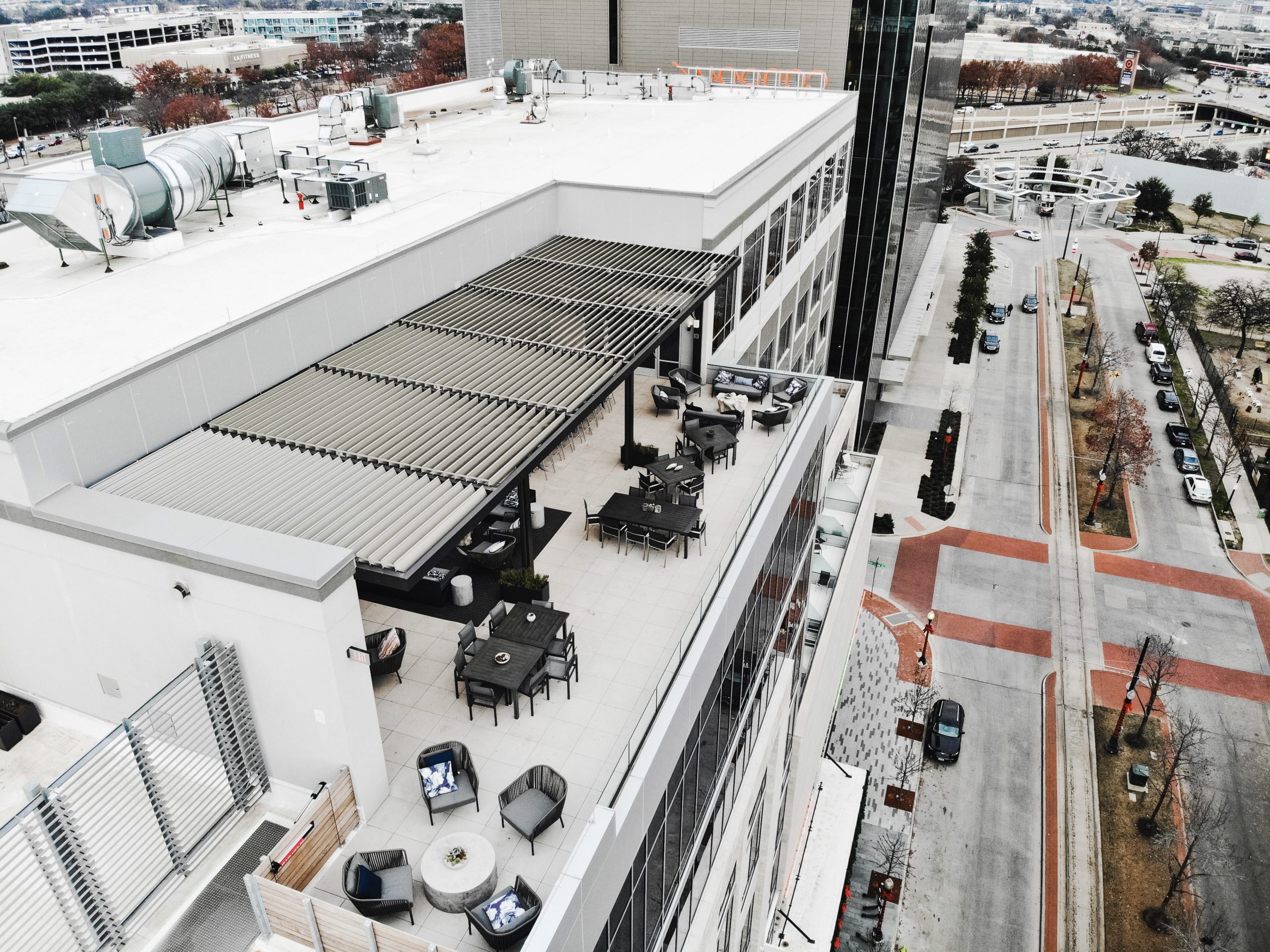
Because the systems can span larger areas, designers can create defined seating zones, bar areas, or VIP sections beneath the pergola without closing off the rooftop environment.
Lighting integration further enhances the design. Subtle perimeter lighting, downlighting, or color-changing LED systems can transform the atmosphere as evening progresses.
The result is a rooftop space that feels curated and immersive rather than improvised.
Weather Protection Without Losing the Outdoor Experience
Weather unpredictability is one of the biggest operational risks for rooftop venues.
Rain can quickly disrupt service, forcing guests to move indoors and reducing available seating. Wind and sudden temperature changes can also impact guest comfort.
A louvered pergola system allows venues to respond instantly.
When rain begins, the louvers close to form a protective roof while an integrated gutter system channels water away from the seating area. Guests can remain comfortable without leaving the rooftop.
When conditions improve, the louvers reopen to restore the open-air environment.
This flexibility helps rooftop bars avoid sudden service interruptions and maintain a consistent guest experience.
It also allows operators to confidently schedule events, private parties, and reservations without worrying about weather disruptions.
Creating a More Comfortable Guest Environment
Nightlife venues succeed when guests want to stay longer. Comfort plays a major role in that decision.
Smart pergolas allow operators to fine-tune the rooftop environment throughout the evening. Adjusting the louvers can improve airflow during warm nights or reduce wind exposure when temperatures drop.
Integrated lighting creates atmosphere without overwhelming the space. Guests can enjoy the skyline views while still benefiting from carefully designed illumination.
Fans, heaters, and shade options help venues maintain an inviting environment even as weather conditions shift.
When guests feel comfortable, they stay longer, order more, and are more likely to return.
Supporting Year-Round Rooftop Experiences
Many rooftop venues operate seasonally due to weather limitations. Smart pergolas change that dynamic by making outdoor spaces far more adaptable.
During warm months, adjustable louvers provide shade and airflow that keep guests cool. In cooler seasons, integrated heating elements help maintain comfortable temperatures for evening gatherings.
Enclosures, screens, or side panels can also be incorporated to block wind while preserving the elevated rooftop atmosphere.
This level of adaptability allows rooftop venues to remain active through much more of the year.
For hospitality groups investing in rooftop spaces, maximizing year-round usability can significantly improve return on investment.
The Future of Rooftop Nightlife Design
Hospitality design continues to evolve as guest expectations grow. Rooftop venues are no longer simple open terraces with scattered seating.
They are becoming carefully designed entertainment environments that combine architecture, technology, and atmosphere.
Smart pergolas fit naturally into this shift. They allow venues to create adaptable rooftop spaces that balance aesthetics with functionality.
Developers and restaurateurs increasingly view these systems as long-term infrastructure rather than decorative additions.
As cities grow denser and rooftop real estate becomes more valuable, adaptable outdoor design will play an even greater role in hospitality development.
Rooftop bars and lounges are moving toward a future where weather flexibility, environmental control, and immersive design all work together.
Smart pergolas are helping lead that transformation.
Transform Your Rooftop Space with Intelligent Outdoor Design
Rooftop venues thrive when atmosphere, comfort, and flexibility work together. Smart pergola systems allow hospitality spaces to deliver all three while maintaining the open-air energy that makes rooftop nightlife so appealing.
Adjustable louvered roofs give operators control over sunlight, airflow, and weather protection while enhancing the architectural presence of their rooftop spaces.
For restaurants, bars, hotels, and entertainment venues looking to elevate their rooftop environments, smart pergolas create new possibilities for design and guest experience.
If you are planning a rooftop bar, lounge, or hospitality venue, explore how a motorized louvered roof system can transform your outdoor space into a destination guests return to again and again.